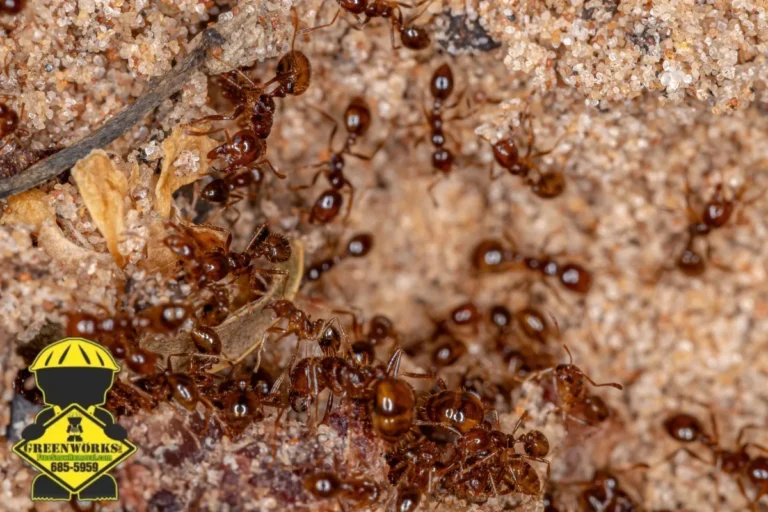
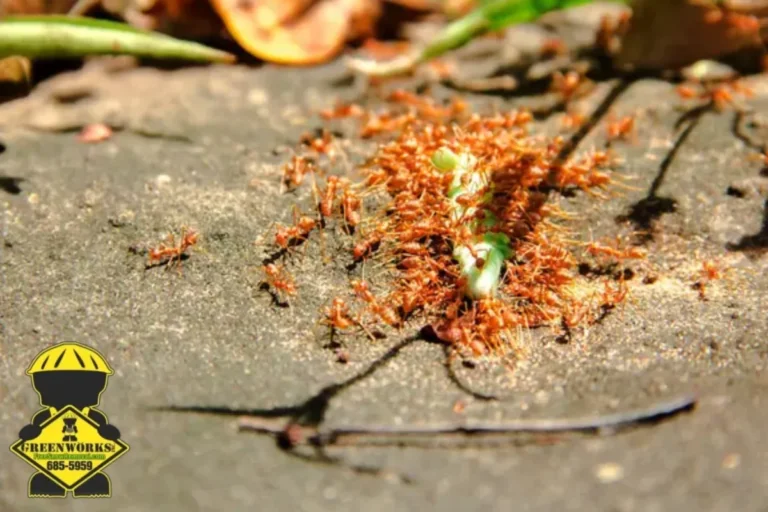
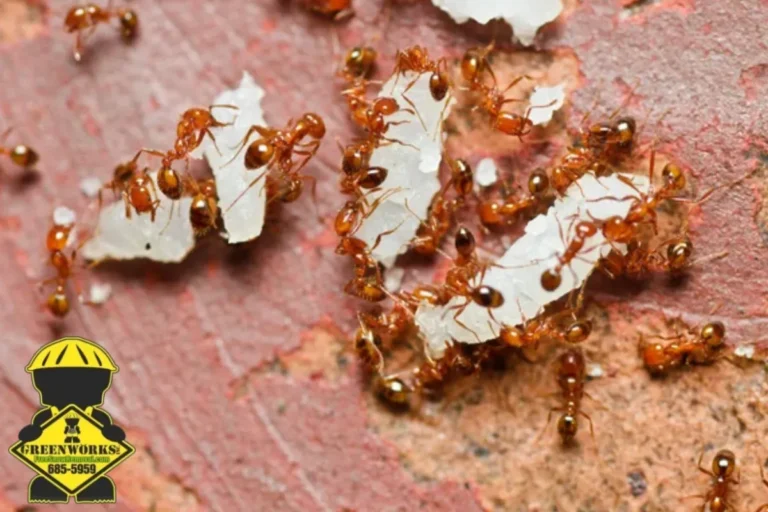
Professional fire ant control eliminates the entire colony by utilizing slow-acting insect growth regulators (IGRs) and non-repellent dual-action baits that worker ants carry deep into subterranean mounds. This targets the egg-laying queen, disrupting the reproduction cycle and causing total colony collapse within weeks without triggering mound budding or relocation.
Stepping on an aggressive fire ant mound while working in the yard or letting pets play on the grass is a painful experience that many property owners know all too well. Fire ants build extensive underground tunnel networks that can reach deep beneath the surface, making them far more resilient than standard garden ants. Simply spraying the visible surface workers or pouring boiling water over a mound only eliminates a fraction of the population, leaving the egg-laying queen unharmed to rebuild the nest.
During a recent site visit for a home in Seffner, our technicians inspected a back lawn where a homeowner had applied several off-the-shelf mound sprays over three months. Instead of eliminating the pests, the surface irritation caused the single large colony to split into five smaller, highly aggressive mounds spread across the property line. Understanding how professional fire ant control works helps homeowners make informed decisions to protect their lawns, families, and pets safely.
DIY Surface Treatments vs. Professional Colony Elimination (Treatment Matrix)
Mode of Action, Queen Mortality, and Long-Term Prevention Comparison
Understanding how professional treatments differ from basic DIY methods clarifies why targeted baits are necessary for total nest collapse. The comparison matrix below breaks down treatment modes, success rates, and long-term effectiveness.
| Feature / Metric | Contact Sprays & DIY Boiling Water | Contact Mound Drenches | Professional Dual-Action Baits & IGRs |
| Primary Target | Visible surface worker ants | Surface mound population | Egg-laying queen(s) & deep brood |
| Mode of Action | Instant contact kill (pyrethroids) | Fast-acting neurotoxin contact | Slow-acting metabolic/growth inhibitor |
| Colony Reaction | Mound budding/stress relocation | Partial kill with survivor scatter | Foraging sharing & total collapse |
| Queen Mortality Rate | Extremely low (under 10%) | Low to moderate (15% to 30%) | Complete (100%) |
| Residual Protection | None (0 to 48 hours) | Short-term (1 to 2 weeks) | Long-term (Up to 12 months) |
By targeting the reproductive core of the nest rather than fighting visible worker ants on the surface, professional solutions ensure the entire colony collapses permanently.
Biological Mechanisms & Treatment Specifications
Key Terminology & Chemical Mode Specifications
To understand why specialized formulations succeed, it helps to review the biological mechanisms that allow professional treatments to penetrate deep underground networks.
Insect Growth Regulators (IGRs)
Definition: Biochemical compounds that mimic natural juvenile hormones within ant biology.
Mode of Impact: Sterilizes the egg-laying queen and prevents larvae from maturing into adult worker ants, effectively shutting down reproduction.
Non-Repellent Slow-Acting Active Ingredients
Definition: Specialized active ingredients that foraging worker ants cannot detect or smell while gathering food.
Mode of Impact: Delays mortality so foraging ants share the bait with the queen and young brood through food sharing (trophallaxis) before dying.
Polygyne vs. Monogyne Colony Dynamics
Definition: Monogyne nests contain a single queen, whereas polygyne nests harbor multiple fertile queens sharing an interconnected underground tunnel network.
Mode of Impact: Requires broad lawn baiting to ensure active ingredients reach all reproductive queens across multi-nest networks.
Understanding these biological factors allows technicians providing Seffner pest control to select formulations that work with natural ant behavior rather than fighting against it.
Step-by-Step Professional Fire Ant Eradication Process
The 4-Step Protocol for Complete Nest Collapse
Professional eradication relies on a systematic approach that ensures every mound on your property receives thorough coverage.
- Property Mapping & Colony Identification: Technicians inspect the lawn to locate active mounds, assess ant density, and determine whether single-queen or multi-queen colonies are present.
- Strategic Broadcast Bait Application: Non-repellent baits are distributed evenly across active foraging zones when worker ants are out searching for food.
- Targeted Mound Treatment: Specialized liquid or granular treatments are applied directly to high-density mounds to disrupt core nesting chambers housing active queens.
- Perimeter Barrier & Residual Defense: A long-lasting barrier is established along property borders to block migrating colonies from neighboring yards from entering treated soil.
Following this step-by-step protocol stops active infestations and creates a protective buffer around your lawn.
Applying Our Integrated Pest Management Approach to Solve This
Advanced Fire Ant Eradication with Greenworks, Inc
At Greenworks, Inc, we bring over 50 years of local experience to every property we serve. We know that aggressive fire ants can ruin outdoor enjoyment and pose real safety risks for children and pets playing in the grass. That is why we take a strategic approach to fire ant treatment, using eco-friendly methods and customized solutions to eliminate fire ant mounds and prevent future infestations.
Our process begins with a detailed audit of your outdoor space to map active mounds, identify high-traffic zones, and assess soil conditions. Our methods are both fast and thorough, targeting fire ant mounds directly and applying protective barriers around your lawn. By combining slow-acting growth regulators with non-repellent baits, we ensure the active ingredients reach the deep underground chambers where the queen resides.
When property owners need reliable pest control in Seffner, FL, our approachable team delivers clear communication, transparent pricing, and dependable results. Whether you need single-mound remediation or complete lawn protection, we tailor our service to keep your yard safe and pest-free year-round.
Common Industry Misconception: “Pouring Gasoline or Boiling Water Kills the Mound Permanently”
Debunking Home Remedy Fire Ant Myths
A common myth among homeowners is that pouring gasoline, bleach, or boiling water directly into a fire ant mound destroys the colony forever. While these extreme methods kill visible worker ants near the surface, they fail to reach deep subterranean chambers located several feet underground.
Worse yet, disturbing the mound without eliminating the queen triggers an emergency defense response known as “budding.” Surviving ants escape through side tunnels, moving the queen and egg larvae to create several smaller, highly aggressive mounds across your lawn.
People Also Ask (FAQ)
How long does it take for professional fire ant bait to kill a mound?
Most professional dual-action bait applications achieve complete colony collapse within 7 to 14 days as worker ants carry the bait deep underground to feed the queen and larvae.
Why do fire ants keep coming back after using store-bought mound sprays?
Store-bought contact sprays kill surface workers too quickly, preventing them from carrying active ingredients down to the queen. The surviving queen continues laying eggs, rapidly rebuilding the nest or establishing a new mound nearby.
Is professional fire ant control safe for children and pets?
Yes. Professional technicians apply low-dose granular baits and micro-encapsulated formulations specifically designed for ant biology, allowing lawn areas to be used safely once dry.
Why is ongoing pest control necessary for fire ants?
Our warm climate, sandy soil, and frequent rain create ideal living conditions for fire ants year-round, making routine lawn barriers essential for stopping new colonies from migrating onto your property.
Conclusion
Eliminating fire ant colonies permanently requires targeting the egg-laying queen deep underground rather than spraying visible workers on the surface. Greenworks, Inc. uses slow-acting growth regulators, non-repellent baits, and routine lawn barriers to help achieve total colony collapse while preventing new mounds from taking root.
If you are evaluating options for pest control in Seffner or need assistance clearing active mounds from your grass, our team is ready to help. We take pride in delivering effective, eco-friendly lawn solutions backed by decades of local expertise.
Reclaim your lawn and enjoy a safe, pest-free yard. Contact us today to request your free quote and schedule your fire ant consultation!