Budding occurs when ants detect a repellent spray and split their single colony into several smaller ones to survive. Instead of destroying the nest, these sprays act as an alarm, prompting the ants to move their queens and larvae to new, safe spots. This survival reflex can quickly turn a small kitchen ant problem into a house-wide infestation.
The Difference Between Killing and Repelling
When you see ants on your counter, the first instinct is to grab a spray bottle. However, the chemistry inside those bottles matters more than you might think. Most store-bought sprays are “repellents.” To an ant, these sprays smell like a massive warning sign. They don’t just walk into the poison; they avoid it.
If you use a repellent, you are essentially drawing a line in the sand. The ants that get hit directly will die, but the thousands of ants hidden behind your walls will simply find a new path. This is a common issue we see when providing pest control in Pasco County. If the ants know you are coming, they will hide, wait, and eventually find a way around the “barrier” you created.
Comparison: Repellent Sprays vs. Non-Repellent Baits
| Feature | Repellent Sprays | Non-Repellent Baits |
| Detection | Ants smell it and stay away | Completely invisible to ants |
| Speed | Kills only the ants it touches | Kills slowly over a few days |
| Colony Impact | Triggers “Budding” | Kills the Queen and the whole nest |
| Long-term Result | Ants return in new spots | The problem is permanently solved |
| Success Rate | Low for social insects | Extremely high for total removal |
How Budding Works (Step-by-Step)
Ants have been around for millions of years because they are experts at survival. When a repellent spray hits a trail, the surviving ants send out a chemical “911” call. This starts the budding process. This is why a single nest in your kitchen can quickly become four nests spread throughout your home.
- The Alarm Phase: Forager ants return to the nest and signal that the main entrance is toxic.
- The Queen Move: In colonies with multiple queens, common in Florida, the workers grab the queens and the eggs.
- The Great Dispersal: The ants split up. One group might move to the bathroom, another to the laundry room, and a third to the area behind the dishwasher.
- Satellite Nests: Within hours, the colony has divided its resources into “satellite” nests that grow independently.
During a recent property audit in Pasco County, we found a home where the owners had been spraying their baseboards for weeks. By the time they called us, the ants had budded so many times that we found nests in their bedroom closets and even inside the motor of their refrigerator. Trying to solve the problem with repellent sprays had actually made the infestation five times larger.
The GreenWorks Strategy: Neutralizing Budding at the Source
At Greenworks, Inc., we do not believe in “scaring” ants away. We use a proprietary strategic approach that exploits the ants’ natural social habits. This method is built on over 50 years of local experience dealing with the specific types of ants that thrive in our humid climate.
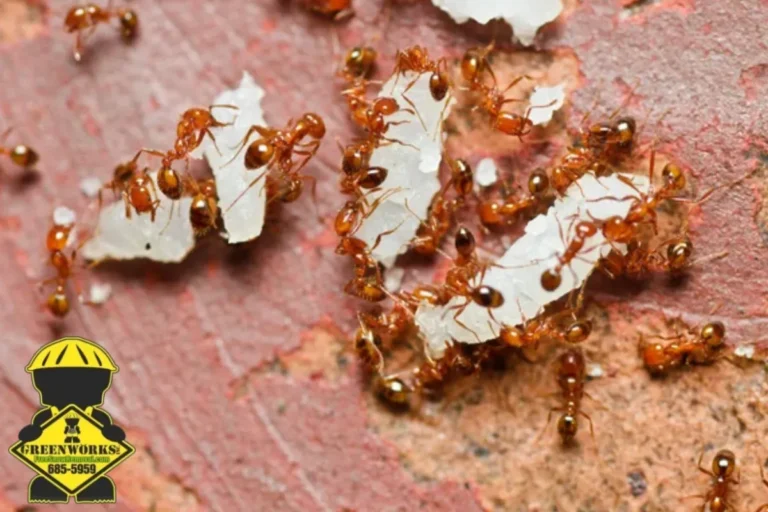
Instead of a “wall” of poison, we use non-repellent materials that the ants cannot detect. The ants walk through these treated zones and carry the product back to the nest’s heart. They share it with the queen and the babies through a process called food sharing. Because it doesn’t kill them instantly, they have plenty of time to spread the product throughout the entire colony.
This results in fast and effective treatments that stop budding before it starts. We target the root of the problem, the queens, to ensure the colony cannot reproduce. This strategic approach is much more reliable than using a “knockdown” spray that only kills the few ants you can see on your floor. For homeowners looking for an exterminator in Pasco County, FL, this scientific method is the only way to get lasting results.
Why Seeing Dead Ants Can Be Misleading
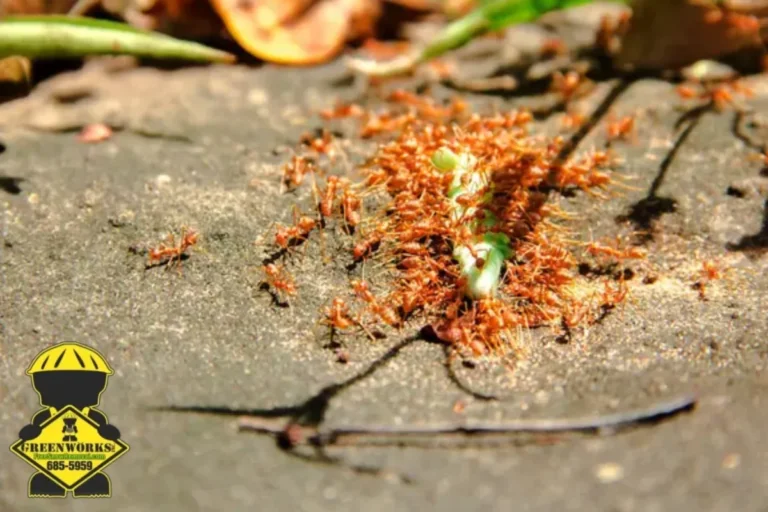
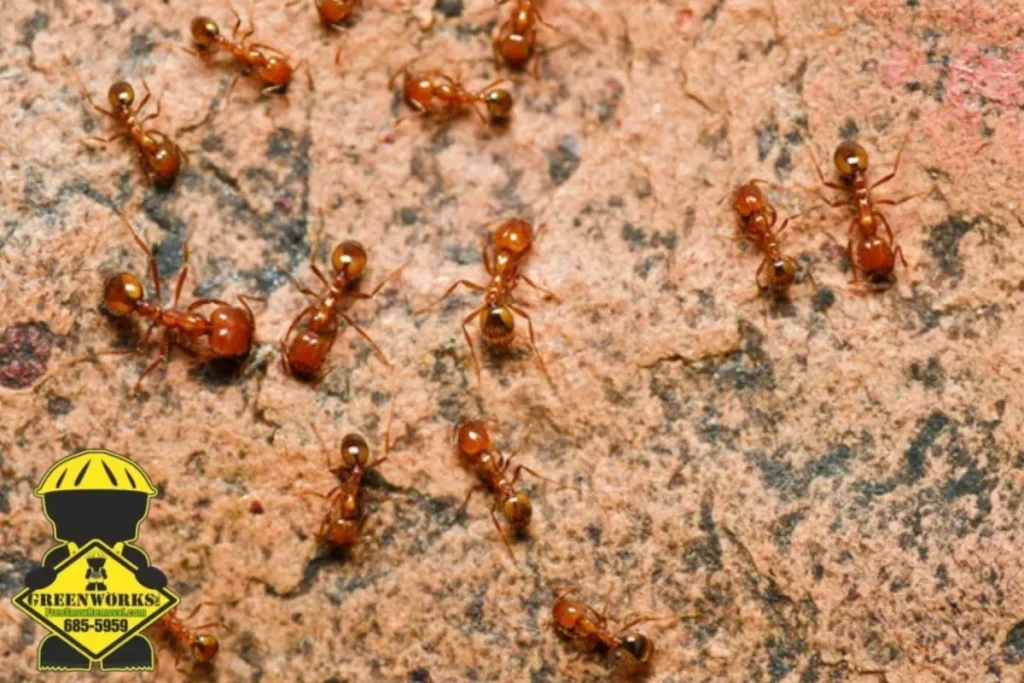
A very common mistake in fire ant control is thinking that a pile of dead ants means the job is done. While it feels good to see the evidence of a kill, it usually means you have only reached the “disposable” members of the colony. The workers you see on your counter represent less than 10% of the total nest population.
When you kill these workers with a repellent, the colony views it as a localized disaster. They respond by working harder to replace the lost workers and moving the rest of the nest to a safer location. A truly effective treatment often looks like nothing is happening for the first 48 hours. You might even see more ants at first as they find our bait and bring their friends to help carry it back home. This is exactly what we want to happen for a total colony collapse.
Technical Specifications: Ant Control Features
Repellency: How easily an ant can sense a chemical. High repellency causes budding, while low or zero repellency allows for colony transfer.
Horizontal Transfer: The way a non-repellent product moves from one ant to another through grooming and touch.
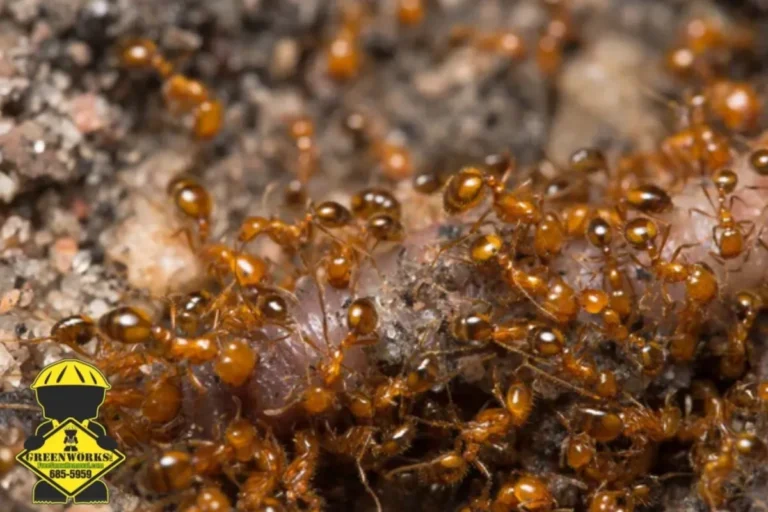
Satellite Nests: Smaller colonies that split off from the main nest during a budding event, often located near moisture like sinks or AC vents.
Non-Repellent Baits: These are designed to be “tasteless” to the ant. This ensures they eat the product and share it with the queen without suspecting a threat.
Effective pest control in Pasco County, FL, requires using products that stay active long enough to reach these hidden satellite nests.
People Also Ask
Why are my ants coming back after I spray?
They are likely returning because the spray caused “budding.” You killed the ants on the surface, but the rest of the colony moved to a new spot and is now coming out of different cracks.
Can I use both sprays and baits?
No. If you use a repellent spray near your bait, the ants will avoid the bait entirely. You will “contaminate” the food source, and the ants won’t take the medicine back to the queen.
How long does it take for non-repellent baits to work?
It usually takes between 3 and 7 days to see the colony fully collapse. This delay is necessary to make sure the foragers have time to feed the entire nest, including the queen.
Why are ants so bad in Florida?
Our heat and sandy soil make it very easy for ants to tunnel and move. High humidity also makes “budding” easier because ants can find water sources almost anywhere in a home.
Your Trusted Partner for a Pest-Free Home
At Greenworks, Inc., we know that your home is your sanctuary. Finding ants in your kitchen or bathroom is frustrating and can feel like a battle you can’t win. We want you to feel reassured and confident that your home is in the hands of experts. Our brand is professional, approachable, and focused on our local community.
With over 50 years of local experience, we are a trusted partner for families and businesses in the Tampa Bay area. We work closely with you to create a healthy, pest-free environment while ensuring clear communication and hassle-free service. We believe in transparency and sustainability, which is why our decisions are rooted in providing tailored, eco-friendly solutions that meet your specific needs.
What sets us apart? It is our results-driven strategic approach. We don’t just offer a quick fix; we provide lasting improvements. Our team understands the unique challenges of our local climate, and we are dedicated to building trust in every service we provide.
Let us help you set up an ongoing service plan. We will keep your property well-maintained and pest-free year-round with our hassle-free approach to lawn care and pest management. Give us a call today to see how our fast, effective treatments can restore your peace of mind.